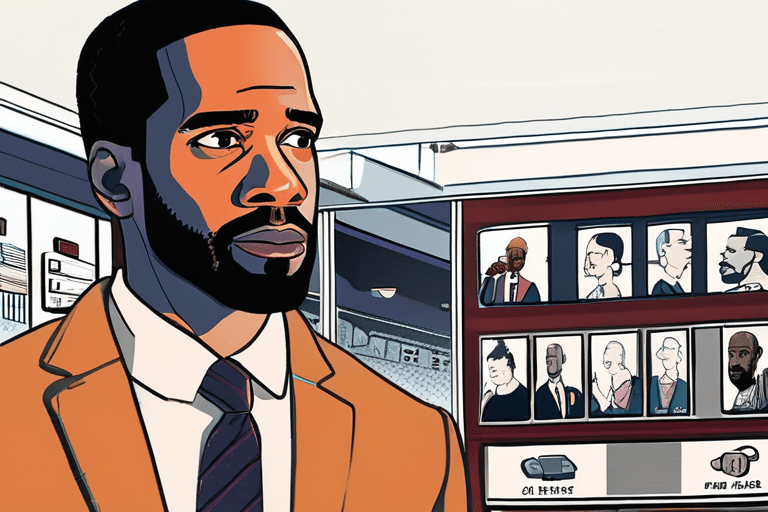
Andre Gaines' adaptation of Amiri Baraka's 1964 play, "Dutchman," premiered recently, offering a contemporary interpretation of the work while remaining largely constrained by its source material. The film, starring André Holland as Clay, explores themes of race and Black identity in a fraught encounter in New York City.
According to Murtada Elfadl of Variety, the film feels as provocative as ever, but its adherence to the original play limits its potential. The narrative centers on Clay's encounter with a stranger whose influence threatens to drastically alter his life. One character advises Clay to learn from the past to avoid a similar fate, signaling the adaptation's intention to offer a fresh perspective.
"Dutchman," the original play, emerged during the Civil Rights era and quickly became a significant work exploring racial tensions and the complexities of Black identity. Baraka's play is known for its confrontational dialogue and symbolic representation of societal power dynamics. Gaines' adaptation seeks to update these themes for a modern audience, prompting viewers to consider how these issues persist in contemporary society.
The film joins a growing number of adaptations and reinterpretations of classic works that grapple with issues of race and identity. These adaptations often spark debate about the balance between honoring the original work and offering new perspectives relevant to current social and political contexts. The success of such adaptations often hinges on their ability to resonate with modern audiences while maintaining the core message of the original work.
Currently, "Dutchman" is available for viewing on select platforms. Future developments may include broader distribution and further critical analysis of its impact and relevance in today's cultural landscape.
















Discussion
Join the conversation
Be the first to comment